Counseling + Neurofeedback · Grandville, Michigan
Talk it through.
Learn new skills.
Train your brain to find its calm.
Talk therapy tailored to you, strengthened by gentle, noninvasive neurofeedback, included at no additional cost. You build skills and insight in our conversations while your brain practices calmer, steadier patterns of its own.
Grandville, Michigan. Conveniently located off I-196 and Rivertown Parkway, with easy access from many parts of West Michigan.
Neurofeedback included with counseling
Othmer-trained · 3½+ years of hands-on experience
Rewire your brain. Renew your life.
What brings you here?
You don’t have to figure it all out on your own.
Every plan starts with therapy shaped around you. For most clients, I strongly recommend adding neurofeedback to help your brain support the work we do together. I serve clients ages 6 and up, with a focus on teens and adults.
Anxiety & overwhelm
Racing thoughts, constant tension, a mind that won’t switch off.
Learn more →Talk therapy · Understand your triggers and build coping skills you can use anywhere.
+ Neurofeedback · Gives your brain practice shifting from high alert to calmer.
Trauma & PTSD
Feeling on guard, easily startled, or stuck in what happened.
Talk therapy · Trauma-informed care using cognitive behavioral therapy (CBT), solutions-based, shame resilience, somatic, and narrative therapy, at a pace that feels safe.
+ Neurofeedback · May help a stress-worn nervous system find steadier ground.
ADHD & focus
Losing track, starting but not finishing, feeling scattered.
Talk therapy · Practical strategies for planning, organization, and follow-through.
+ Neurofeedback · Trains the brain patterns involved in attention and focus.
Depression & burnout
Heavy days, running on empty, losing interest in what you used to love.
Talk therapy · Challenge negative thought patterns and reconnect with what matters.
+ Neurofeedback · May support steadier mood, energy, and sleep.
OCD
Intrusive thoughts and rituals that take over your day.
Talk therapy · Exposure and Response Prevention (ERP). I’ve completed two advanced trainings in ERP.
+ Neurofeedback · May help ease the anxious loop that keeps compulsions going.
Big emotions, any age
Quick frustration, meltdowns, moments that are hard to come back from.
Talk therapy · Learn to name, ride out, and recover from strong feelings.
+ Neurofeedback · Practices the calmer, more flexible responses you’re working toward.
Also helping with: stress, sleep and insomnia, self-esteem, grief and loss, life transitions, relationships, parenting, autism, chronic illness and pain, headaches and migraines, traumatic brain injury, menopause and women’s issues, sports performance, and career and life coaching.
My approach
Skills and conditioning. Better together.
Think of a soccer player. They need to know how the game is played, and they need the strength and stamina built in the gym to actually play it. Talk therapy builds the skills. Neurofeedback builds the conditioning.
The skills
Talk therapy
Talk with someone who listens and cares deeply. You gain insight, practical tools, and new ways of responding, using approaches matched to you (see the toolkit below).
Strongly recommended
Both, at no extra cost
Neurofeedback is included with your counseling at no additional cost. Skills are easier to use when your brain has the capacity to use them: talk therapy gives you the playbook, and neurofeedback helps your brain get in shape to run it.
Prefer talk therapy on its own? That’s always your choice.
The conditioning
Neurofeedback
A gentle, noninvasive form of brain training. Sensors read your brain’s activity and give real-time feedback, so your brain gradually learns more balanced patterns, through repetition, like training in the gym.
Talk therapy toolkit
Many approaches, tailored to you
My approach is relationship-centered, trauma-informed, and strengths-based. Rather than one method for everyone, I draw on the tools that fit your needs and goals.
Neurofeedback
Recommended alongside any of these, at no extra cost. How it works →
Cognitive Behavioral Therapy (CBT)
Notice and reshape the thought patterns that keep you stuck.
Exposure & Response Prevention (ERP)
A structured, gradual approach for OCD and anxiety. I’ve completed two advanced trainings.
Somatic therapy
Work with the body’s signals to release stress and feel more grounded.
DBT-informed skills
Practical skills for big emotions, distress, and relationships.
Solutions-based therapy
Build on what’s already working and take clear next steps.
Narrative Therapy
Separate yourself from the problem and rewrite the story you tell.
Motivational Interviewing
Find your own reasons and readiness for change.
Shame resilience therapy
Recognize shame, loosen its grip, and reconnect with your worth.
Neurofeedback, step by step
What a session feels like
Your brain is always producing electrical rhythms, but those signals are like music playing too softly to hear. The feedback from the screen, a tactile device, and sound acts like a mirror for your brain. Seeing its own patterns in real time helps your brain learn and encourages it to try new, more adaptive ways of functioning.
Step 1: Get comfortable
Small sensors rest on your scalp. They only read activity. Nothing is sent into your brain.
Step 2: Watch or listen
You relax with a show, a game, or sound while the system follows your brain in real time.
Step 3: Your brain gets feedback
When your brain moves toward balanced patterns, the screen brightens and grows or the music gets louder: a small reward it learns to repeat.
Step 4: Practice adds up
During each session we track changes in your symptoms and monitor progress.
Neurofeedback: myths and facts
Myth
“It sends electricity into your brain.”
Fact
The sensors only listen. You sit and relax while your brain learns from the feedback.
Myth
“Neurofeedback must cost extra.”
Fact
With Holly, it’s included with your counseling at no additional cost.
Myth
“It’s a quick fix.”
Fact
Like learning any skill, change builds through repetition. Results vary from person to person.
Results vary from person to person, and neurofeedback does not replace medical care. Never change any medication without talking to your prescriber. Learn how neurofeedback works.
About Holly
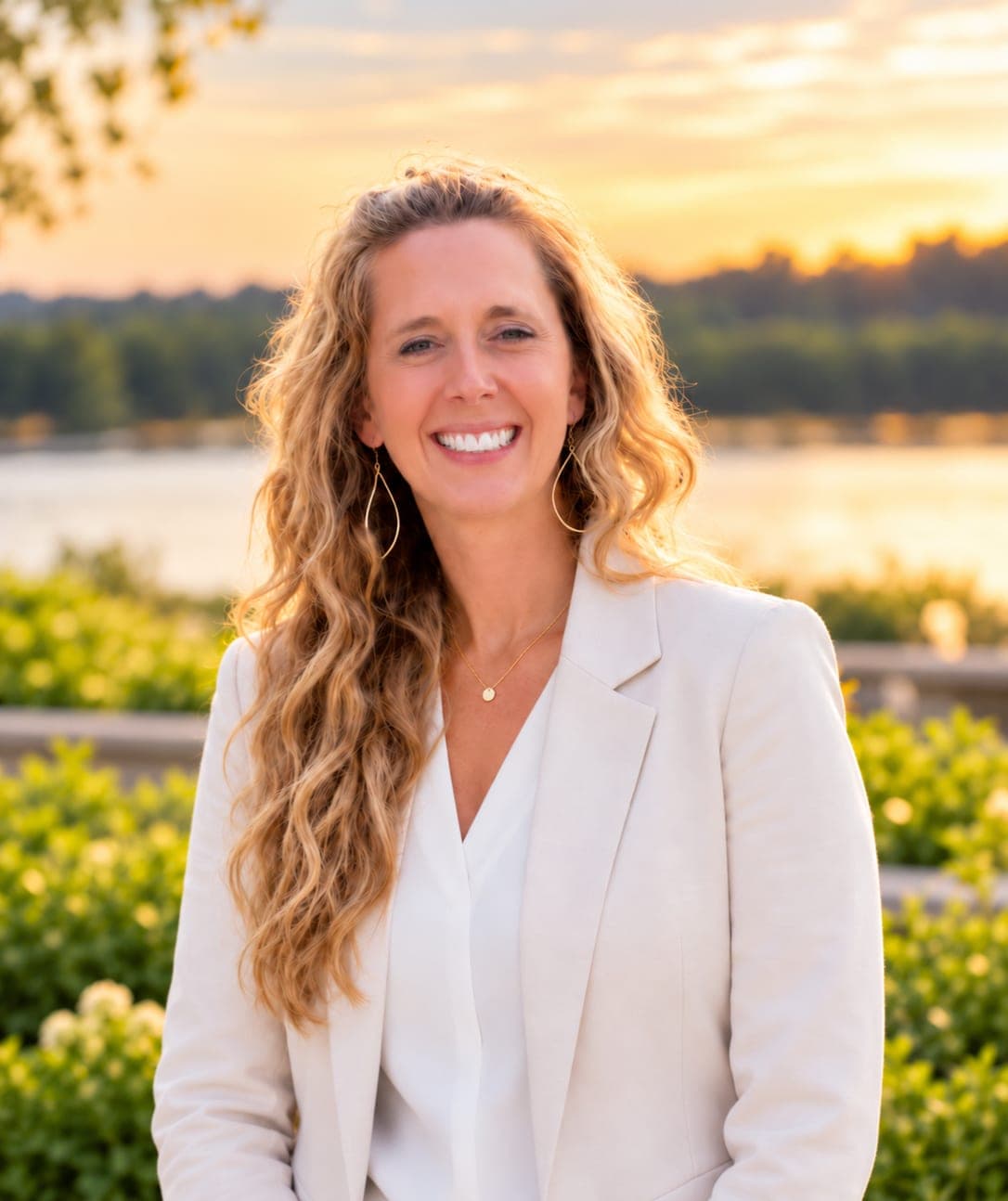
Hi, I'm Holly.
I work with people who feel anxious, stuck, distracted, or emotionally drained, and who want to understand themselves better and heal. I believe people grow best when they feel safe, heard, and empowered. Years in education, mentoring, and student development shaped my strengths-based approach, and neurofeedback became a natural partner to the talk therapy I do.
I hold a Master of Social Work degree and am a Michigan Limited Licensed Master Social Worker (LLMSW). I have over three and a half years of hands-on neurofeedback experience and am trained in the Othmer approach. I have completed Complex Trauma Advanced Training through PESI and have completed two advanced trainings in exposure and response prevention (ERP).
- Master of Social Work
- Michigan LLMSW
- Othmer-method neurofeedback · 3½+ yrs
Holly Allen, LLMSW, provides counseling and neurofeedback services through Blue Water Healing Clinic under clinical supervision.
Insurance
Insurance & fees
Neurofeedback is included with counseling at no additional cost.
Insurance participation and coverage vary by plan and practice location. Please contact Holly to confirm your benefits for counseling with neurofeedback before scheduling.
If you prefer to self-pay or your plan isn't listed, Holly's standard self-pay rate is $150 per session. Sliding-scale fees are available for clients who qualify.











FAQ
Common questions
Do I have to do neurofeedback?
No, but I strongly recommend it. Talk therapy and neurofeedback complement each other, and neurofeedback is included at no additional cost. If you’d rather do talk therapy on its own, that’s always your choice.
Does neurofeedback hurt?
No. The sensors rest on your scalp and only read brain activity. You sit and relax while you watch or listen to the feedback.
How many sessions will I need?
It depends on your goals and how you respond, so there isn’t a single answer. We’ll talk it through together.
Research shows that most people notice their first positive effects after 6–10 sessions, and many people have lasting changes after 26–28 sessions. However, each brain and nervous system is unique, so results cannot be guaranteed.
Where are sessions held?
In Grandville, through Blue Water Healing Clinic. The office is conveniently located off I-196 and Rivertown Parkway, with easy access from many parts of West Michigan.
Is telehealth available?
Yes, for talk therapy. Neurofeedback sessions are only offered in-person.
Can I do neurofeedback while taking medication?
This is something we’ll talk through at your consultation. Neurofeedback doesn’t replace medical care, and you should never change a medication without talking to your prescriber.
Starting is just a conversation away.
A free 15-minute consultation to talk about what’s going on and how talk therapy and neurofeedback can help.
In person in Grandville, conveniently located off I-196 and Rivertown Parkway, with easy access from many parts of West Michigan. Telehealth available for talk therapy.
Email opens your own mail app with a short template. Please keep it brief and general, without medical details. Reaching out through this website does not establish a therapist-client relationship.
- Step 1: Request a free 15-minute consultation.
- Step 2: Talk through your goals and build a plan: talk therapy, with neurofeedback recommended alongside it.
- Step 3: Practice new skills and regulation patterns, track progress, and adjust as we go.